
How to Winterize Your Outdoor Spigots in Niagara Region
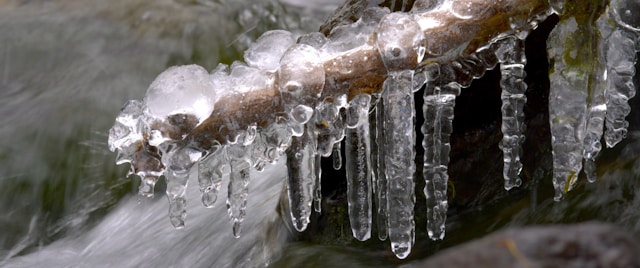
As temperatures drop across St. Catharines, Niagara Falls, Welland and the surrounding areas, protecting your outdoor plumbing becomes essential. Frozen pipes and burst hose bibs are among the most common and costly winter plumbing emergencies in the Niagara Region. The good news? Winterizing your outdoor spigots is a straightforward process that can save you thousands in repairs.
Why Winterizing Your Hose Bibs Matters in the Niagara Region
The Niagara Region experiences harsh winters with temperatures regularly dipping below freezing from November through March. When water freezes inside your outdoor spigots or the pipes behind them, it expands, causing cracks and ruptures that can lead to significant water damage once temperatures rise again.
A burst pipe can cause flooding in your walls, basement, or foundation, leading to expensive repairs that far exceed the cost of proper winterization. If you experience a water leak from frozen pipes, you may face structural damage, mould growth, and costly repairs. Taking 15 minutes now (or soon as it’s getting cold) to winterize your outdoor faucets can prevent headaches and costly emergency plumbing calls later.
Tools and Materials You’ll Need
Before you begin, gather these simple items:
- Adjustable wrench or pliers
- Bucket or towel
- Optional: Outdoor faucet covers (foam insulated caps)
Step-by-Step Guide to Winterizing Outdoor Spigots
Step 1: Locate Your Indoor Shut-Off Valve
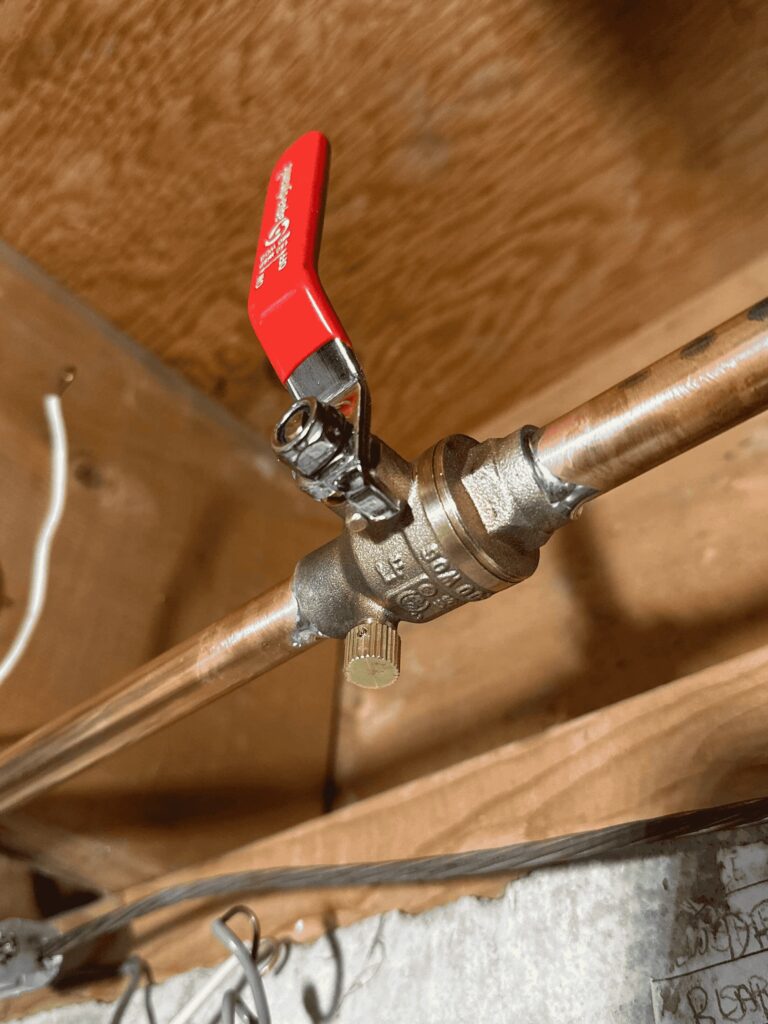
Most outdoor hose bibs have a dedicated shut-off valve inside your home, typically located in the basement, crawl space, or utility room. This valve controls water flow to the exterior faucet. Look for a brass or copper valve along the water line that leads to the outside wall.
The indoor shut-off valve is your first line of defense against frozen pipes. Turn it clockwise to stop water flow to outdoor spigots.
Step 2: Turn Off the Water Supply
Once you’ve located the shut-off valve, turn it clockwise (to the right) until it’s fully closed. This stops water from flowing to your outdoor faucet. The valve handle should be perpendicular to the pipe when closed.
Step 3: Drain the Remaining Water
After shutting off the indoor valve, head outside to your hose bib. Open the outdoor faucet completely by turning it counterclockwise. This allows any remaining water in the line to drain out. Leave the outdoor faucet open throughout winter to prevent pressure buildup from any residual water that could freeze. This simple step can prevent expensive water leak repairs in the spring.
Step 4: Locate and Open the Drain Cap
Here’s the step many homeowners miss: most shut-off valves have a small drain cap or bleeder valve. This brass cap is usually located on the side of the shut-off valve body.
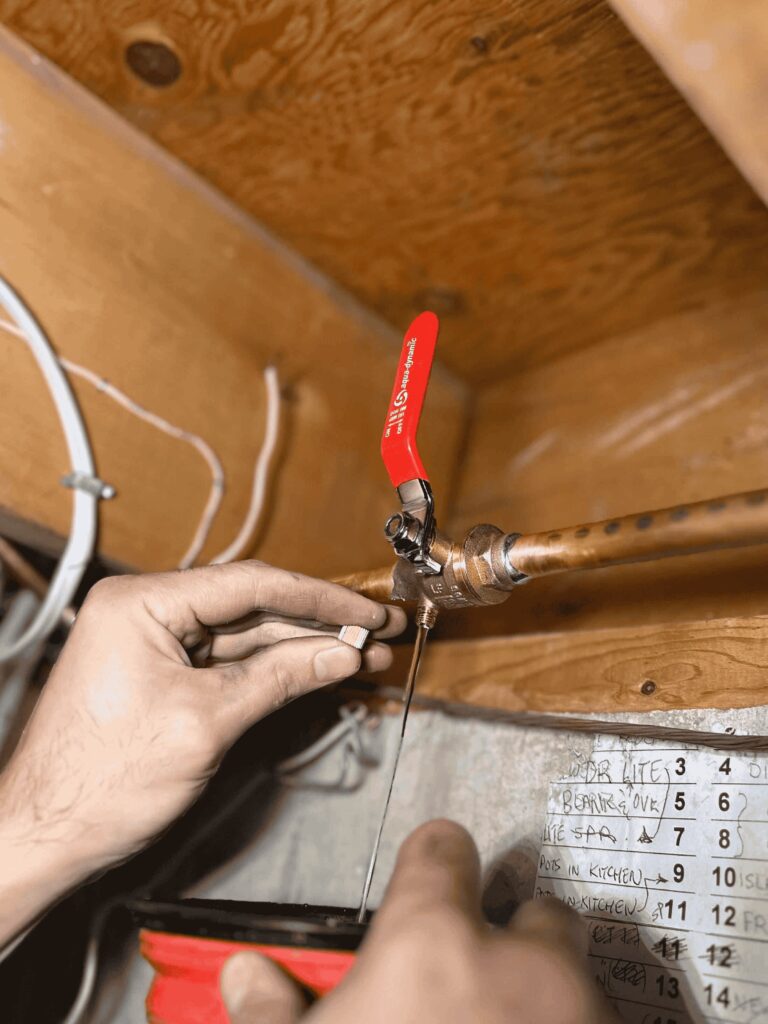
The drain cap (shown here) must be opened to fully drain water from the pipe. Use pliers or your fingers to unscrew it counterclockwise.
Using your fingers or pliers, carefully unscrew the drain cap counterclockwise. Be prepared—a small amount of water will drain out. Place a bucket or towel underneath to catch the water. Place the cap back on and tighten well by hand. If
Step 5: Disconnect and Store Garden Hoses
Remove all garden hoses from outdoor spigots. Drain the hoses completely, coil them, and store them in a garage or shed. Leaving hoses attached can trap water in the faucet, increasing the risk of freezing.
When to Winterize Your Outdoor Faucets in Niagara
The ideal time to winterize outdoor spigots in the Niagara Region is late October or early November, before the first hard freeze. However, if you haven’t done it yet and temperatures are still above freezing during the day, it’s not too late.
Signs Your Outdoor Pipes May Already Be Frozen
If you forgot to winterize and suspect freezing, watch for these warning signs:
- No water flow when you turn on the outdoor faucet
- Visible frost or ice on the exterior pipe
- Bulging or cracked sections of exposed pipe
- Water leaking from the faucet or surrounding wall
If you notice any of these signs, don’t attempt to turn on the water. Contact a licensed plumber immediately to assess the damage before it worsens. Burst pipes in winter are one of the most common plumbing emergencies in the Niagara Region, and quick action can minimize damage.
Spring De-Winterization: Reversing the Process
When warmer weather returns in late March or April, you’ll need to reverse these steps:
- Close the outdoor faucet completely
- Replace and tighten the indoor drain cap
- Slowly open the indoor shut-off valve
- Check for leaks at both the indoor valve and outdoor faucet
- Test the outdoor spigot by running water briefly
Common Winterization Mistakes to Avoid
Even well-intentioned homeowners can make these errors:
- Forgetting the drain cap: Simply turning off the indoor valve isn’t enough. You must open the drain cap to fully empty the line.
- Leaving hoses attached: Hoses trap water against the faucet, creating a prime spot for ice formation.
- Not checking all spigots: Many homes have multiple outdoor faucets. Make sure to winterize every single one.
- Closing the outdoor faucet too soon: Leave outdoor faucets open all winter to allow proper drainage.
When to Call a Professional Plumber
While winterizing outdoor spigots is a DIY-friendly task, some situations call for professional help:
- You can’t locate the indoor shut-off valve
- The shut-off valve is stuck, corroded, or leaking
- You have frost-proof hose bibs that require different maintenance
- You’re unsure about your plumbing configuration
- You’ve already experienced a freeze and suspect damage
- Your outdoor faucet is dripping or won’t fully close (may need faucet repair or replacement)
If you’re dealing with an emergency plumbing situation or need assistance winterizing your outdoor plumbing, Flow-State Plumbing and Drains serves St. Catharines, Niagara Falls, and Welland with fast, reliable service. Our licensed plumbers can assess your system, handle winterization, and make any necessary repairs before cold weather causes damage.
Protect Your Home This Winter
Winterizing your outdoor spigots is one of the simplest yet most important seasonal maintenance tasks for Niagara Region homeowners. By following these straightforward steps, you’ll protect your home from frozen pipes, water damage, and expensive emergency repairs.
Don’t wait until the first hard freeze—take 15 minutes today to winterize your outdoor faucets. Your future self (and your wallet) will thank you.
Need help winterizing your plumbing or dealing with frozen pipes? Flow-State Plumbing and Drains offers reliable, reasonably priced licensed plumbing services throughout the Niagara Region. Contact us today for a free quote or to schedule service in St. Catharines, Niagara Falls, or Welland.
Call (289) 402-8926 for immediate assistance with your plumbing needs.